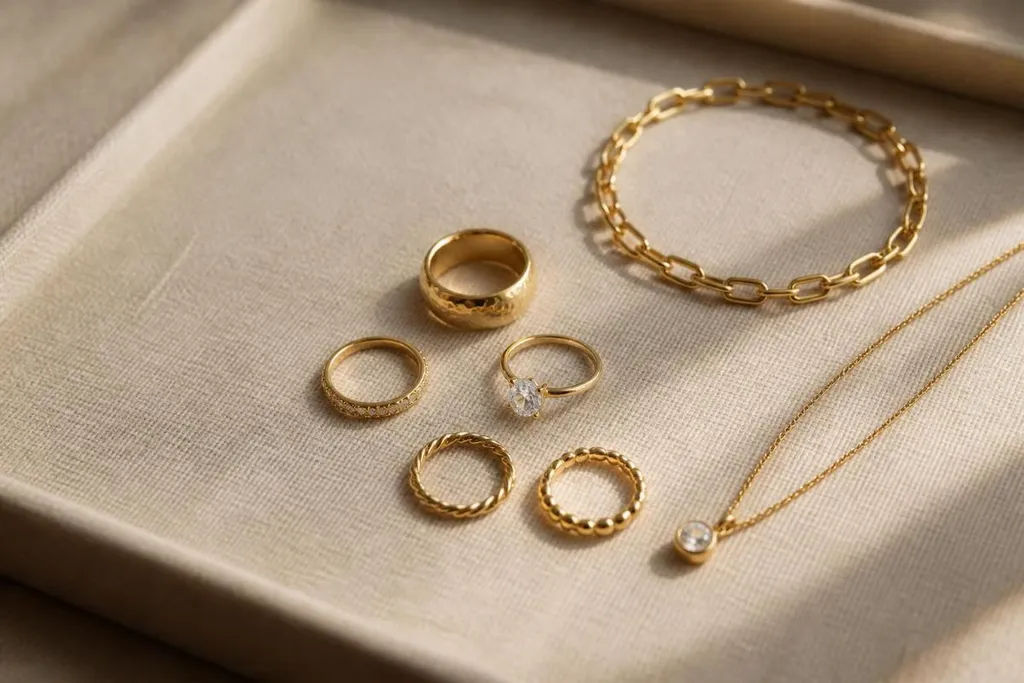
A fine jewellery collection becomes most useful when its pieces work together rather than existing as isolated purchases. The aim is not necessarily to own more jewellery, but to choose pieces with enough quality, proportion and stylistic flexibility to move comfortably between everyday dressing, formal occasions and significant milestones. A well-considered collection can evolve gradually while still feeling coherent years later.
For anyone planning to order fine jewellery from Lily Arkwright, it helps to begin with versatility rather than novelty. Diamond and gemstone jewellery can provide very different moods, while precious-metal choices influence how easily new pieces coordinate with those already owned. By establishing a few dependable foundations first, more distinctive designs can be added without creating a collection that feels fragmented or difficult to wear.
Begin With Pieces That Earn Regular Wear
The strongest foundation pieces are rarely the most complicated. They are the ones that can be worn repeatedly without demanding a particular outfit or occasion.
Stud earrings are a useful example. A well-proportioned pair can work with tailoring, eveningwear and casual clothing while remaining understated enough for frequent use. Simple pendants provide similar flexibility, introducing a focal point without overwhelming other jewellery.
Bracelets and refined bands can also become dependable everyday pieces, particularly when their proportions are comfortable enough for long periods of wear.
Size should be considered in terms of lifestyle rather than status. Larger stones create greater presence, but that does not automatically make them more versatile. Someone may prefer a substantial pair of earrings because they regularly wear minimal clothing and want jewellery to provide the principal detail. Another person may get far more use from smaller stones that transition easily from the office to evening plans.
Frequency of wear is often a better measure of value than visual impact alone.
Establish a Precious-Metal Direction
A collection does not have to use one metal exclusively, but having a clear foundation makes future purchases easier to coordinate.
Platinum and white gold create a cool, clean palette that works naturally with colourless stones and many cooler gemstone shades. Yellow gold introduces warmth and has a particularly established fine-jewellery character. Rose gold provides a softer tone that can complement pink, peach and other warm-coloured gemstones.
Existing jewellery can help determine the most useful starting point. If a watch, engagement ring or wedding band is worn every day, choosing additional pieces that relate naturally to its metal can make the collection easier to combine.
Mixed-metal styling can then be introduced deliberately. A yellow gold bracelet worn beside a white-metal watch can look considered when other pieces repeat both tones.
The objective is cohesion rather than rigid matching.
Use Gemstones to Introduce Personality
Once versatile foundations are established, coloured gemstones provide an effective way to give a collection greater individuality.
Sapphire offers considerable variety, from familiar blue to pink and yellow tones. Ruby introduces richer red, while emerald creates a distinctive green focal point. Softer colours such as aquamarine or morganite can add interest without dominating an outfit.
Lab-grown gemstones and diamonds also broaden the possibilities for creating fine jewellery around particular colours, cuts and proportions.
Rather than purchasing several highly distinctive pieces that compete with one another, consider how each new gemstone fills a role. A coloured pendant may become the principal feature of an otherwise neutral outfit, while gemstone earrings can provide a smaller repeat of the same colour elsewhere.
Diamond jewellery can act as a visual bridge between these pieces because its neutral appearance combines easily with different gemstone palettes.
Think in Layers, Not Individual Purchases
Versatility increases when jewellery can be worn both alone and in combinations.
Necklaces of different lengths can create deliberate layering without becoming tangled visually. Bracelets should vary enough in width or texture to remain distinct when stacked. Earrings can be selected with other regularly worn pieces in mind rather than treated as completely separate accessories.
Proportion is important here. If every piece is equally bold, the collection can become difficult to combine. A more practical approach is to mix quieter foundation jewellery with one or two stronger focal pieces.
Care should also be part of long-term planning. Appropriate storage helps prevent scratching and tangling, while regular gentle cleaning maintains the appearance of gemstones and precious metals. Periodic professional inspections are worthwhile for pieces containing multiple settings or frequently worn stones.
Final Thought
Building a fine jewellery collection is most rewarding when each purchase expands the possibilities of what is already owned. Versatile foundations, a considered precious-metal palette and carefully chosen gemstones create far more flexibility than a collection driven entirely by individual statement pieces.
Start with jewellery that genuinely suits everyday life, then add colour, scale and detail gradually. Over time, the result becomes more than a group of beautiful objects: it becomes a personal collection in which each piece has a purpose, works naturally with the others and remains relevant as style evolves.