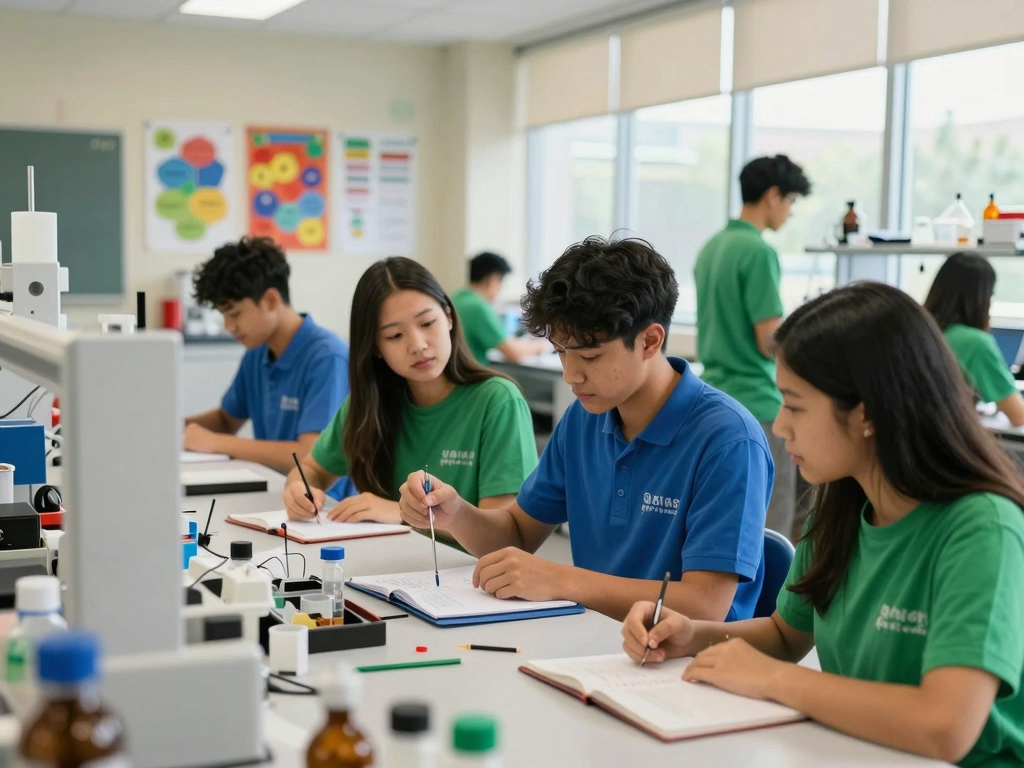
Overview of Koi Research Labs and Klow Peptide Stack
Koi Research Labs has established itself as a pivotal player in the field of peptide research, combining innovative science with a commitment to quality and traceability. In June 2026, the company unveiled the Klow Peptide Stack—a sophisticated multi-peptide blend designed exclusively for laboratory research. This product symbolizes a stride towards comprehensive documentation and consistency in peptide synthesis. The Klow Peptide Stack contains four important peptides: GHK-Cu, BPC-157, TB-500, and KPV, meticulously prepared as a single lyophilized formulation. When exploring options, Koi Research Labs provides comprehensive insights into the world of research peptides, emphasizing clarity and quality.
Introduction to Koi Research Labs
Koi Research Labs LLC, based in Sheridan, Wyoming, is dedicated to the development and distribution of high-grade peptide materials designed for scientific research. Their emphasis on quality assurance, coupled with adherence to rigorous testing protocols, supports the reliability of their products in experimental settings. This dedication positions Koi Research Labs as a trusted resource for researchers looking for carefully formulated and documented peptide solutions.
What is Klow Peptide Stack?
The Klow Peptide Stack is a unique formulation intended solely for in vitro laboratory research. Unlike typical consumer products, it is specifically crafted to serve researchers who require a multi-peptide blend that can be referenced through an established framework. Bundling GHK-Cu, BPC-157, TB-500, and KPV into one vial enhances the efficiency of experimental setups and ensures that researchers can acquire comprehensive data from a single, documentable source.
Key Components of Klow Peptide Stack
Each component of the Klow Peptide Stack plays a vital role in research applications. The inclusion of GHK-Cu, BPC-157, TB-500, and KPV not only streamlines the research process but also opens new avenues for exploration in regenerative medicine, wound healing, and other clinical applications. Understanding these peptides' distinct properties can provide researchers with insights into their potential applications and advantages.
Understanding the Components: GHK-Cu, BPC-157, TB-500, and KPV
GHK-Cu: Properties and Uses
GHK-Cu, known as a copper-binding tripeptide, has garnered attention for its role in tissue repair and regeneration. Its molecular structure facilitates numerous biological activities, including the stimulation of collagen and glycosaminoglycan synthesis. This peptide is increasingly recognized in laboratory studies for its potential to enhance healing processes, making it a valuable addition to the Klow Peptide Stack. Its use in research could illuminate new pathways in therapeutic strategies aimed at managing chronic wounds.
BPC-157: Role in Research
BPC-157, a synthetic pentadecapeptide, has shown promise in various studies for its role in modulating healing and recovery. Research has indicated that this peptide may influence angiogenesis and collagen formation, leading to improved healing outcomes. As a component of the Klow Peptide Stack, BPC-157 offers researchers opportunities to explore its effects in a controlled environment, particularly in studies focused on tissue repair and regeneration.
TB-500 and KPV: Their Significance
TB-500, a peptide related to thymosin beta-4, is recognized for its ability to promote cell migration and angiogenesis, essential processes in the healing of injuries. Its presence in the Klow Peptide Stack adds substantial value, particularly for laboratories investigating muscle or tissue repair. KPV, a tripeptide recognized for its anti-inflammatory properties, synergistically enhances the stack's potential. Together, these peptides create a robust foundation for various research applications that delve into recovery and regenerative medicine.
Quality Assurance and Testing Methodologies
Importance of Certificate of Analysis (COA)
Quality assurance is paramount when it comes to laboratory research. The Certificate of Analysis (COA) serves as a critical document that validates the identity and purity of each peptide in the Klow Peptide Stack. Each batch undergoes rigorous testing, and the COA provides traceable results, ensuring that researchers can trust the materials they are using in their experiments. This documentation is particularly significant for multi-peptide blends, where multiple identities must be confirmed.
HPLC Purity Characterization Process
Koi Research Labs employs high-performance liquid chromatography (HPLC) to characterize the purity of the Klow Peptide Stack. This process involves passing the peptide mixture through a chromatographic column, where individual components are separated and quantified. The purity of each peptide is reported as an area percent, indicating the proportion of the overall mixture corresponding to each peptide. HPLC results are essential for confirming that only the intended peptides are present, which is crucial for ensuring experimental reliability.
Mass Spectrometry for Identity Confirmation
Mass spectrometry is employed to confirm the identity of each peptide in the Klow Peptide Stack. Techniques such as electrospray ionization mass spectrometry (ESI-MS) and matrix-assisted laser desorption/ionization time-of-flight (MALDI-TOF) assess the mass-to-charge ratios of the peptides, enabling researchers to verify that the correct peptides are included in the blend. This process helps identify any potential sequence errors or discrepancies, supporting the integrity of the research findings.
Laboratory Applications and Considerations
Research Use Only: Legal and Ethical Considerations
The Klow Peptide Stack is strictly intended for research use only and should not be administered to humans or animals. This classification is crucial for ethical research practices, ensuring compliance with legal regulations that govern peptide use in experimental settings. Laboratories must ensure that they handle these substances responsibly and maintain oversight to align with institutional and regulatory guidelines.
Best Practices for Using Klow Peptide Stack
When utilizing the Klow Peptide Stack in laboratory environments, researchers should adhere to best practices to maximize the efficacy and safety of their experiments. This includes:
- Storing the peptides in controlled environments to preserve stability.
- Thoroughly reviewing the COA before use to confirm batch identity and purity.
- Implementing standardized protocols for reconstitution and application.
- Documenting all experimental procedures and results meticulously to enhance reproducibility.
Case Studies on Klow Peptide Stack Applications
Innovative research utilizing the Klow Peptide Stack can provide insights into its potential applications. For instance, studies focusing on wound healing might explore the synergistic effects of GHK-Cu and BPC-157 in accelerating recovery times. Another avenue for exploration could involve examining TB-500 and KPV's role in muscle repair following injury. This approach can yield valuable data on optimal peptide combinations and dosages for effective treatment strategies.
Future Trends in Peptide Research and Development in 2026
Emerging Practices and Innovations
The landscape of peptide research is continually evolving, with innovative practices emerging that could enhance the application of peptide blends like the Klow Peptide Stack. Advances in bioinformatics and predictive modeling may guide researchers in designing more effective peptide combinations tailored to specific therapeutic outcomes. Moreover, utilizing AI-driven analysis could streamline data collection and interpretation, leading to more efficient research cycles.
Predicted Changes in Research Regulations
As peptide research becomes more prominent, regulatory frameworks may also evolve to accommodate new scientific findings and applications. It is anticipated that there will be increased scrutiny regarding the safety and efficacy of peptide blends in both research and clinical settings. Researchers will need to stay informed about these regulatory changes to ensure compliance while pursuing their experimental goals.
The Future of Peptide Blends in Laboratory Research
Looking ahead, the popularity of peptide blends like the Klow Peptide Stack is likely to increase, driven by a growing recognition of their potential applications in regenerative medicine and therapeutic research. Collaborations between research institutions and biotechnology companies may foster the development of novel peptide formulations that can address unmet medical needs. As the field expands, researchers must remain diligent in establishing the scientific credibility of their work to support the responsible advancement of peptide science.
What is the Klow Peptide Stack?
The Klow Peptide Stack is a concentrated research formulation consisting of four specific peptides—GHK-Cu, BPC-157, TB-500, and KPV—designed for use in laboratory research settings only. This comprehensive blend allows researchers to explore the synergistic effects of these peptides in a singular, convenient package, thereby streamlining the experimental process.
How does Koi Research Labs ensure quality?
Koi Research Labs places significant emphasis on quality through rigorous testing and documentation processes. Each lot of the Klow Peptide Stack is accompanied by a detailed Certificate of Analysis (COA) that verifies component identity, purity, and endotoxin levels. This commitment to quality assures laboratories of the reliability and integrity of the materials they utilize in their research.
What are the practical applications of Klow Peptide Stack?
The Klow Peptide Stack's practical applications span various fields of research, particularly in regenerative medicine, wound healing, and tissue repair. Its carefully selected components enable researchers to investigate cellular mechanisms involved in healing processes and develop protocols aimed at enhancing recovery.
What research guidelines should be followed?
Researchers using the Klow Peptide Stack must adhere to institutional and regulatory guidelines governing research practices. These guidelines typically include ensuring responsible handling of materials, maintaining thorough documentation of experimental procedures, and obtaining necessary approvals for research involving peptides.
How is Klow Peptide Stack different from Glow?
The Klow Peptide Stack differs from the well-known Glow stack primarily by its inclusion of KPV, which adds an additional layer of functionality to the blend. While Glow comprises GHK-Cu, BPC-157, and TB-500, Klow encompasses all these components plus KPV, thereby offering a broader spectrum of potential research applications and outcomes.