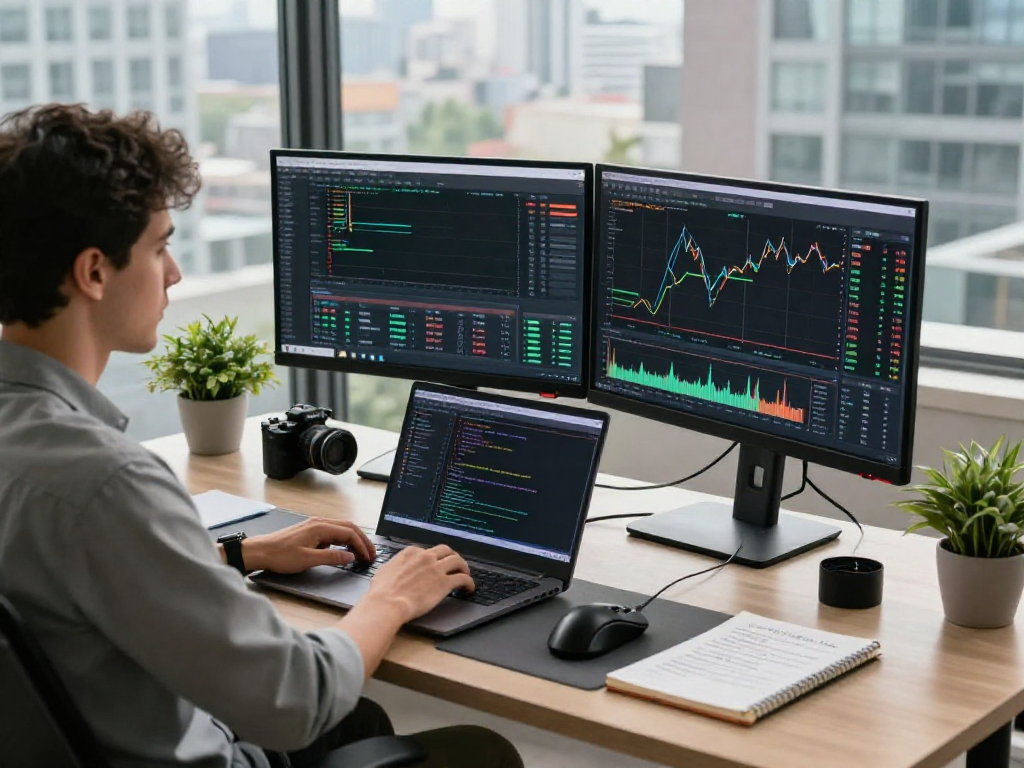
Understanding Real-Time Forex APIs
The world of finance is rapidly transforming with the advent of blockchain technology and its capabilities in providing unparalleled transparency and efficiency. Within this ecosystem, real-time Forex APIs have emerged as critical tools for developers, traders, and financial institutions aiming to harness low-latency data for enhanced trading strategies. By utilizing a 低延迟行情API, stakeholders can access real-time exchange rates, perform technical analysis, and stay ahead in the competitive environment of foreign exchange markets.
What is a Forex API?
A Forex API, or Foreign Exchange Application Programming Interface, allows developers to connect applications directly to forex market data. APIs facilitate the interaction between different software applications and enable users to access real-time market data, historical data, and analytical tools. These interfaces are crucial for trading platforms and algorithmic trading strategies, as they provide instantaneous access to price feeds and transaction data essential for making informed trading decisions.
Benefits of Low-Latency Data Access
Accessing low-latency data is vital for traders, especially those engaged in high-frequency trading (HFT) where milliseconds can lead to significant gains or losses. Low-latency Forex APIs reduce the time between data acquisition and decision-making, allowing for faster execution of trades. This speed minimizes slippage and improves the accuracy of order fulfillment, which are crucial for successful trading operations.
Integration with Trading Platforms
Integrating Forex APIs with trading platforms is straightforward and often involves RESTful API calls or WebSocket connections. Developers can leverage SDKs (Software Development Kits) provided by various API service providers to facilitate seamless integration, thereby ensuring that traders can access live data feeds within their custom-built applications or existing platforms effortlessly.
Technical Aspects of Low-Latency Forex APIs
WebSocket vs. REST API Queries
When it comes to accessing Forex data, developers typically choose between WebSocket and REST API protocols. WebSocket connections maintain a single open connection that allows for continuous data streaming, making it ideal for real-time applications. In contrast, REST APIs follow a request-response model, where the user must continually request data, leading to potential delays in high-frequency trading scenarios. Choosing the optimal method depends largely on the trading strategy and necessary data latency.
Measuring Latency and Performance
Latency measurement is crucial in understanding the performance of Forex APIs. Common metrics include round-trip time (RTT), where the time taken for a data request to be sent and a response received is recorded. Ideally, a Forex API should offer millisecond-level latency to ensure users can act on the most accurate and timely data possible.
Data Coverage: Global Currency Pairs
Forex APIs provide access to a vast array of global currency pairs, typically exceeding 150 pairs. Comprehensive data coverage allows traders to analyze multiple markets and make decisions based on comprehensive macroeconomic trends and localized events. This broad access is essential for both retail and institutional traders as they diversify their portfolios and mitigate risks across different currencies.
Trading Strategies Utilizing 低延迟行情API
Real-Time Market Analysis Techniques
Market analysis is pivotal for successful trading. Utilizing low-latency Forex APIs enables traders to employ various analysis techniques, ranging from technical analysis (TA) to fundamental analysis (FA). Technical analysts often rely on real-time price movements and patterns such as support and resistance levels, to develop their trading strategies, while fundamental analysts focus on economic indicators and reports that may influence currency valuations.
Using Technical Indicators in Trading
Technical indicators play a significant role in Forex trading strategies. Indicators such as Moving Averages, Relative Strength Index (RSI), and MACD (Moving Average Convergence Divergence) can provide insights into market trends and potential reversal points. By leveraging low-latency data, traders can respond quickly to indicator signals, improving their chances of executing profitable trades.
Quantitative Trading: Maximizing Returns
Quantitative trading utilizes algorithmic strategies to analyze historical data and predict future price movements. By harnessing a low-latency Forex API, quantitative traders can implement complex mathematical models to execute trades based on predefined criteria with minimal delay. This method can maximize returns while managing risks effectively through automated systems.
Security Measures for Forex Trading Data
Protecting Your Trading Environment
As Forex trading moves into the digital realm, robust security measures become paramount. Protecting trading environments often involves implementing firewalls, encryption protocols, and secure access controls. Furthermore, incorporating VPNs (Virtual Private Networks) can add an additional layer of security to safeguard sensitive data and maintain privacy during trading operations.
Best Practices for API Key Management
API keys serve as critical access credentials for Forex APIs. To secure these keys, users should avoid hardcoding them into applications and instead utilize environment variables or secret stores. Regularly rotating API keys and granting minimal permissions can further enhance security measures against unauthorized access.
Avoiding Common Security Pitfalls
Common security threats facing Forex traders include phishing attacks, unauthorized access to accounts, and malicious software. Users must remain vigilant against such threats by implementing two-factor authentication (2FA), employing strong password policies, and being aware of potential scams prevalent in the trading ecosystem. Regular security audits can also help identify vulnerabilities in trading systems.
Future Trends in Forex Trading Technology
Emerging Technologies in Financial Data Analysis
Emerging technologies, such as artificial intelligence (AI) and machine learning (ML), are reshaping the landscape of Forex trading. These technologies facilitate advanced data analysis, enabling traders to uncover patterns in large datasets that were previously unattainable. Implementing AI-driven algorithms can enhance predictive capabilities and optimize trading strategies through continuous learning.
Regulatory Changes Affecting Forex API Usage
The regulatory environment surrounding Forex trading is constantly evolving. Traders utilizing Forex APIs must stay informed about industry regulations that may impact API usage, such as data protection laws and compliance requirements set by local and international regulatory bodies. Adhering to rules like KYC (Know Your Customer) and AML (Anti-Money Laundering) is crucial for maintaining the legitimacy of trading operations.
Impact of AI and Machine Learning
AI and machine learning are revolutionizing Forex trading by providing powerful analytics and decision-making capabilities. These technologies facilitate real-time data processing, enabling traders to execute strategies that adapt to live market conditions. As machine learning algorithms improve, they will become essential tools for traders looking to gain a competitive edge in volatile markets.
FAQs About Forex APIs
What are the benefits of using a low-latency Forex API?
The benefits of low-latency Forex APIs include swift access to real-time data, improved execution speeds, and enhanced accuracy in trade operations. Such APIs are essential for high-frequency traders who rely on rapid data processing to capitalize on fleeting market opportunities.
How do I integrate a Forex API with my trading platform?
Integrating a Forex API involves configuring connections through either REST or WebSocket protocols, depending on the API's capabilities. Most APIs provide documentation and SDKs to assist developers in building functionality into their trading platforms.
What security measures should I take when using a Forex API?
Security measures for Forex APIs include securing your API keys, enabling two-factor authentication, monitoring for suspicious activity, and regularly updating your security policies to protect against emerging threats.
Can low-latency Forex APIs improve my trading performance?
Yes, utilizing low-latency Forex APIs can significantly improve trading performance by reducing delays in data retrieval and execution. This enhancement allows traders to make more informed decisions and respond to market changes promptly.
What are the future trends in Forex technology?
Future trends in Forex technology are likely to include the increased use of AI for predictive analytics, enhanced regulatory compliance measures, and the emergence of blockchain solutions to enhance transaction transparency and efficiency.